When a flood, burst pipe, or appliance leak hits your Melbourne property, two terms come up almost immediately: water extraction and water damage restoration. Most people use them interchangeably. They are not the same thing, and understanding the difference matters more than you might think.
Getting water extraction right without completing proper restoration leaves your property at serious risk of mould, structural damage, and long-term deterioration. And skipping straight to restoration without thorough extraction means you are building on a wet foundation, quite literally.
This guide from Flood Services Melbourne explains exactly what each process involves, how they work together, and why both are essential to a full and safe recovery after any water event.
What Is Water Extraction?
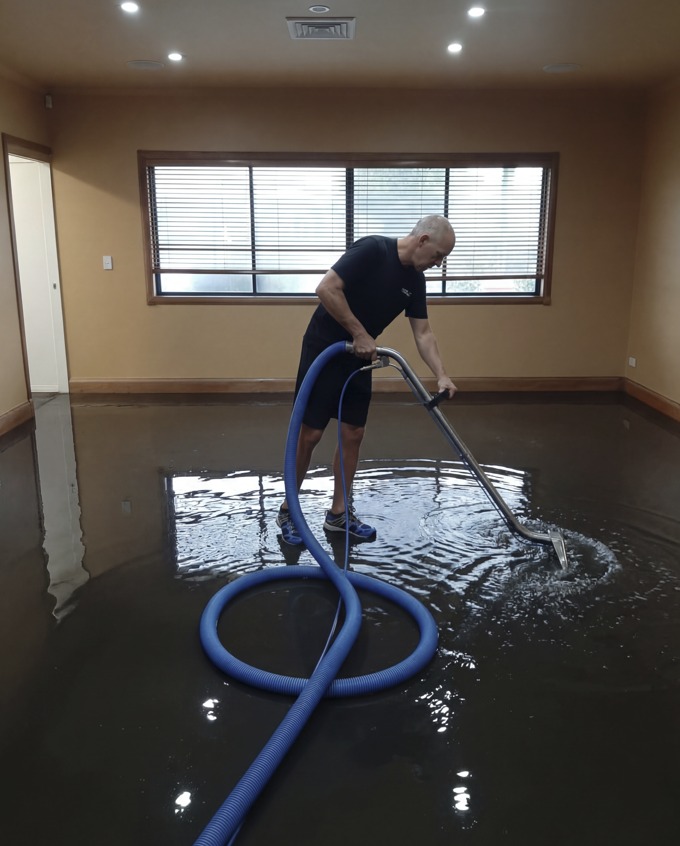
Water extraction is the first and most immediate step after a water emergency. It is the physical process of removing standing or surface water from your property using professional-grade equipment. Think of it as the emergency response: getting the water out before it can spread further or penetrate deeper into building materials.
What Water Extraction Involves
- Removing standing water from floors, carpets, and hard surfaces using industrial wet vacuums and truck-mounted extraction units
- Lifting saturated carpet and underlay to extract water from beneath
- Pumping water from flooded basements, subfloors, or lower ground areas
- Removing visible pooling from wall cavities where accessible
- Initial moisture readings to map the spread of water beyond what is visible
What Water Extraction Does Not Do
This is the critical point most property owners miss. Water extraction removes the water you can see and reach with equipment. It does not:
- Dry moisture trapped inside wall cavities, ceiling spaces, or subfloor structures
- Remove water that has wicked up through drywall, timber framing, or insulation
- Prevent mould from forming in areas that remain damp after extraction
- Restore or repair any structural materials that have been damaged
- Sanitise surfaces contaminated by the water event
Key point: After professional water extraction, a property can still contain significant moisture inside its structure. Surfaces that feel dry to the touch may be holding moisture levels high enough to trigger mould growth within 24 to 48 hours.
Read more about why speed matters in our guide on what to do in the first 24 hours after water damage.
What Is Water Damage Restoration?
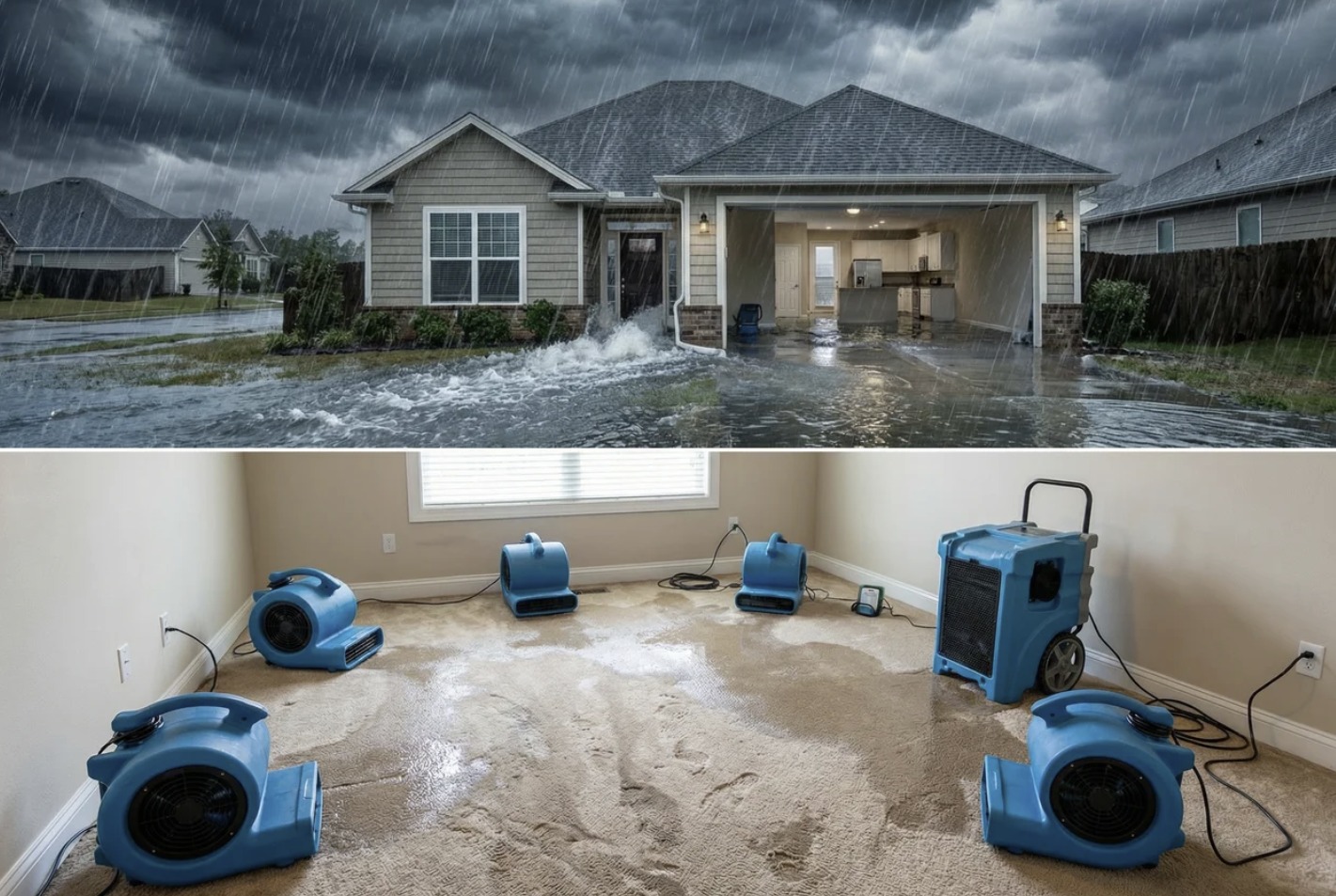
Water damage restoration is the complete, multi-stage process of returning a water-affected property to a safe, dry, and liveable condition. Extraction is one component of restoration, but restoration covers everything that happens before, during, and after extraction to ensure the property is genuinely recovered, not just superficially dried.
What Water Damage Restoration Involves
Stage 1: Assessment and Moisture Mapping
Before any water is removed, a professional restoration team assesses the full extent of the damage. Using thermal imaging cameras and calibrated moisture meters, they map where water has travelled beyond the visible wet area. This includes inside wall cavities, under flooring, above ceilings, and through subfloor structures. Without this step, hidden moisture is missed and restoration is incomplete from the start.
This is why professional moisture testing is a non-negotiable part of any proper restoration process, not an optional add-on.
Stage 2: Water Extraction
Emergency extraction of all visible and accessible water. This is the step most commonly described as “water extraction” on its own, but within a proper restoration process it is one stage of many, not the entire job.
Stage 3: Structural Drying
Commercial dehumidifiers, air movers, drying mats, and heating systems are deployed to draw moisture out of structural materials from the inside. This is not the same as opening a window or running a household fan. Industrial drying equipment creates controlled airflow and humidity conditions specifically designed to pull moisture out of timber, concrete, drywall, and insulation without causing further damage to those materials.
Our structural drying service monitors moisture levels throughout the drying period and confirms with readings when the structure has reached safe moisture levels. Drying times typically range from three to seven days depending on the extent of saturation and the materials involved.
Stage 4: Carpet and Floor Restoration
Carpet, underlay, timber floors, and hard flooring are assessed individually. Where restoration is possible, carpet is dried, sanitised, and relaid. Where materials are beyond recovery, they are removed and documented for insurance purposes.
See our full guide on how to dry wet carpet after a flood or leak for detail on what is and is not salvageable.
Stage 5: Mould Prevention and Remediation
Once drying is confirmed, anti-microbial treatments are applied to all affected surfaces to prevent mould from establishing. If mould has already begun to grow during the time between the water event and the start of restoration, full mould remediation is carried out as a priority before any structural repairs begin. Skipping this step and proceeding directly to repairs traps mould behind new walls and flooring.
Stage 6: Sanitisation and Odour Treatment
Stagnant water, particularly water involving sewage, grey water, or stormwater, introduces bacteria, pathogens, and persistent odours into the affected area. Professional sanitisation eliminates biological contamination and makes the space safe for occupants. Our odour control and treatment service addresses persistent smells that remain after drying is complete.
Stage 7: Documentation for Insurance
A complete restoration process produces a full record: moisture readings taken at each stage, before-and-after photographs, drying logs, and a restoration report. This documentation supports your insurance claim and demonstrates that the property has been professionally and thoroughly treated. Learn more about what your policy is likely to cover in our guide on whether insurance covers water damage restoration.
Side-by-Side Comparison
|
Water Extraction |
Water Damage Restoration |
| What it is |
Removal of visible and accessible standing water |
The complete recovery process from assessment through to sign-off |
| When it happens |
Immediately after a water event |
Begins at the same time as extraction and continues until the property is dry and safe |
| Equipment used |
Wet vacuums, extraction pumps, truck-mounted units |
Moisture meters, thermal cameras, dehumidifiers, air movers, drying mats, HEPA scrubbers, sanitisation agents |
| What it addresses |
Surface and accessible water only |
Surface water, structural moisture, mould risk, contamination, odour, and material recovery |
| Does it confirm dryness? |
No |
Yes, with calibrated moisture readings at each stage |
| Does it prevent mould? |
No |
Yes, through structural drying and anti-microbial treatment |
| Is it enough on its own? |
No |
Yes, when carried out completely |
Why You Cannot Stop at Extraction
This is where many property owners make a costly mistake. After a water event, they call a service that removes the standing water, the floors look dry, and they assume the job is done. Weeks later, mould appears inside a wall. Floorboards begin to lift. A persistent musty smell develops that no amount of cleaning shifts.
This happens because water does not stay where you can see it. The moment water contacts a porous building material, it begins to move by capillary action, wicking up through drywall, across timber framing, and into insulation and ceiling plaster far beyond the original wet area. Extraction removes what is sitting on or near the surface. It cannot pull moisture out of materials that have already absorbed it.
Without structural drying, that absorbed moisture stays in place. Given 24 to 48 hours, it creates the exact conditions mould spores need to germinate. Within a week, active mould colonies can be spreading through wall cavities and subfloor spaces that are completely invisible from the outside.
For more on how this progression works, read our article on how moisture triggers mould growth.
The Consequence of Skipping Restoration Steps
Not all water damage restoration services carry out every stage. Some operators offer extraction only and leave the structural drying to the property owner. Others begin repairs before moisture levels have been verified. Here is what happens when steps are skipped.
Extraction Only, No Structural Drying
The surface is dry but the structure is not. Mould grows inside wall cavities. Timber framing develops moisture-related rot over time. Flooring lifts, warps, or develops odour. The property appears recovered but is actively deteriorating from within.
Drying Without Moisture Mapping First
Equipment is placed based on what is visible rather than where the water has actually travelled. Drying is incomplete. Hidden pockets of moisture are missed. Repairs begin over wet structural materials, sealing moisture inside the building.
Repairs Before Mould Treatment
New plasterboard, flooring, or insulation is installed over surfaces that already have mould beginning to establish. The mould is sealed in rather than removed. Within months it breaks through the new materials, requiring the repairs to be redone along with a full remediation.
No Documentation for Insurance
Without moisture readings, drying logs, and restoration reports, an insurer has no evidence the property was professionally treated. Claims can be reduced or denied on the basis that the damage was not properly managed. See our water damage insurance claim tips for exactly what documentation you need.
How Flood Services Melbourne Handles Both
At Flood Services Melbourne, water extraction is never offered as a standalone service. Every water event we attend is treated as a full restoration job from the first minute on-site. Here is how our process works.
We Assess Before We Act
Thermal imaging and moisture meters map the full extent of water penetration before a single piece of extraction equipment is placed. We know where the water has gone before we start pulling it out, which means the drying strategy is built around the actual damage, not just the visible wet area.
Extraction and Drying Run in Parallel
Our team extracts surface water while simultaneously deploying structural drying equipment in affected areas. We do not wait for extraction to finish before beginning drying. This parallel approach reduces total drying time and limits the window in which mould can establish.
We Monitor Until the Numbers Confirm Dryness
Drying equipment stays in place and moisture levels are checked daily until readings confirm the structure has reached safe moisture content. We do not remove equipment based on how things look or feel. The numbers determine when drying is complete.
Mould Prevention Is Standard, Not Optional
Anti-microbial treatment is applied to all affected surfaces as part of every job. If mould is already present, full mould remediation is completed before any structural repairs are recommended.
Full Documentation Provided
Every job produces a complete record including moisture readings at intake and completion, drying logs, before-and-after photographs, and a restoration report. We liaise with your insurer directly where required and provide the documentation in the format insurers need. Learn more about our insurance support service.
When You Need Each Service
Water Extraction Only: When Is It Appropriate?
Standalone water extraction without full restoration is only appropriate in a very limited set of circumstances: a very minor, isolated spill on a non-porous hard surface that has been addressed immediately and where no moisture has had the opportunity to penetrate any surrounding material. In practice, this accounts for a very small proportion of real-world water events.
If water has been present for more than a few minutes, if it has contacted carpet, drywall, timber, insulation, or any porous surface, or if the affected area is more than a very small and isolated section, extraction alone is not sufficient.
Full Water Damage Restoration: When Is It Required?
Full restoration is required for:
- Any burst pipe or plumbing failure involving significant water release
- Storm flooding or stormwater intrusion into the building
- Appliance leaks that have spread across flooring or contacted walls
- Any event where water has been present for more than a short period
- Any event involving carpet, timber flooring, drywall, or structural elements
- Any sewage or contaminated water event regardless of scale
- Any situation where a musty smell, visible staining, or soft flooring is present
Summary: One Is a Step, the Other Is the Whole Job
Water extraction is the first and most urgent step in recovering from a water event. It is critical. Without fast extraction, water spreads further and penetrates deeper into building materials. But extraction is one part of a larger process, not the complete answer.
Water damage restoration is the full recovery process: assessment, extraction, structural drying, mould prevention, sanitisation, and documentation. It addresses not just what is visible on the surface but everything that water has done inside the structure of your property. Only when all stages are completed can a property be genuinely considered recovered.
Cutting the process short saves money in the short term and costs significantly more in the medium and long term through mould remediation, structural repairs, and failed insurance claims.
Flood Services Melbourne carries out complete water damage restoration, not just extraction.
We are available 24 hours a day, 7 days a week, with a one-hour response time across greater Melbourne. Every job is assessed, extracted, dried, treated, and documented to full professional standard.
Call us now on 1800 958 138 or book a free assessment online.
Frequently Asked Questions
Is water extraction the same as water damage restoration?
No. Water extraction is one stage within the broader water damage restoration process. Extraction removes standing and surface water. Restoration covers the full recovery: assessment, extraction, structural drying, mould prevention, sanitisation, and documentation. Extraction alone leaves structural moisture in place and the property at risk of mould and further damage.
How long does water extraction take?
The extraction phase itself typically takes between one and four hours depending on the volume of water and the size of the affected area. Structural drying, which must follow extraction, typically takes three to seven days. The total restoration timeline depends on the extent of penetration and the materials involved.
Can I do water extraction myself?
Household wet vacuums can remove small volumes of surface water from hard floors. However, they cannot extract water from carpet underlay, wall cavities, or subfloor spaces, and they provide no moisture mapping to identify where water has travelled. For any significant water event, professional extraction equipment and expertise are required to limit damage effectively.
What happens if I only get the water extracted and do not dry the structure?
Moisture trapped inside walls, flooring, and structural cavities will remain until it either evaporates very slowly or causes damage. In Melbourne’s climate, damp structural materials will typically develop mould within 24 to 72 hours. Long-term consequences include mould growth, timber rot, structural deterioration, persistent musty odour, and reduced air quality for occupants. The cost of remediation at that point is significantly higher than completing restoration from the start.
Does insurance cover both water extraction and full restoration?
In most cases, home and building insurance policies in Australia cover both extraction and restoration when the cause is a sudden and accidental event such as a burst pipe or storm flooding. Policies vary, so it is important to notify your insurer promptly and document the damage thoroughly. Read our guide on whether insurance covers water damage restoration and our water damage insurance claim tips for full guidance.
How do I know if my property has been fully dried after a water event?
The only reliable way to confirm complete drying is through calibrated moisture meter readings taken at multiple points across all affected materials and structural cavities. Visual inspection and touch are not sufficient. Our team provides moisture readings at the start, throughout the drying period, and at completion to confirm the structure has reached safe moisture levels before any repairs begin.
Flood Services Melbourne is Melbourne’s emergency flood damage restoration and water cleanup specialist. Available 24/7, on-site within one hour, with full insurance support across greater Melbourne.