Water damage hits fast. Whether it is a burst pipe, a flash flood, a leaking roof, or an overflowing appliance, the first few minutes after discovering the damage are the most important. And in those moments, most people freeze because they are not sure who to call first.
Do you call a plumber? Your insurance company? A restoration service? The answer depends on what has happened, and getting the order wrong can cost you time, money, and significantly more damage to your property.
This guide walks you through exactly who to call, when to call them, and what each professional is responsible for so that when an emergency hits, you are not guessing.
The Short Answer: Call a Water Damage Restoration Service First
If your property is actively flooded or water-damaged right now, your very first call should be to a professional water damage restoration service like Flood Services Melbourne.
Here is why: a plumber can fix the source of the leak, but they cannot extract the water, dry the structure, or prevent mould. Your insurer can process a claim, but they cannot stop the damage spreading while paperwork is being completed. A restoration team does all of the immediate work that actually protects your property in the critical hours after a water event.
Flood Services Melbourne is available 24 hours a day, 7 days a week, with a one-hour response time across greater Melbourne. Call 1800 958 138 now if your property is currently affected.
Who to Call and In What Order
Every water emergency is slightly different, but in most situations this is the correct order of calls to make.
1. Water Damage Restoration Service (Call First)
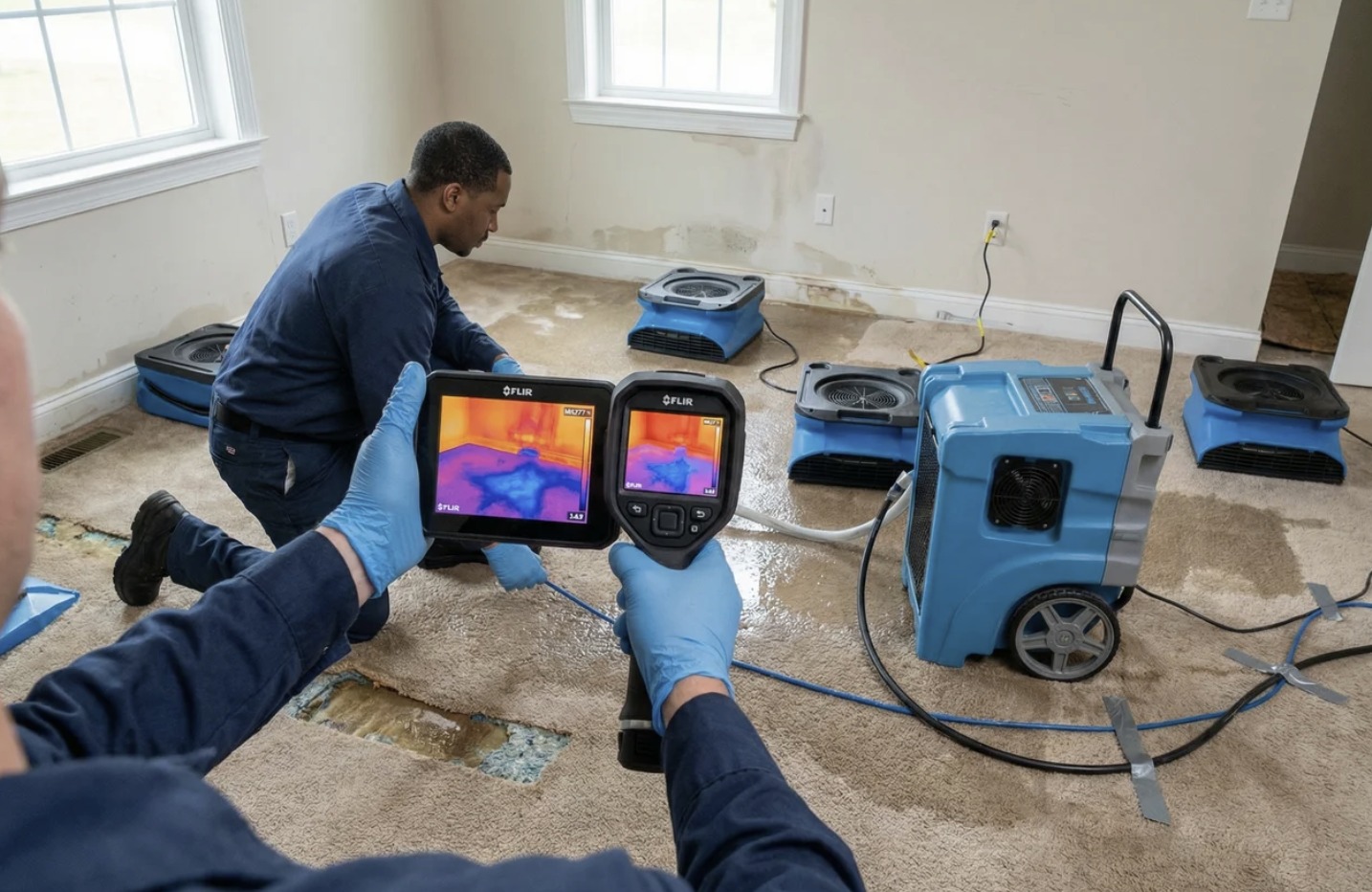
A water damage restoration team is your priority call because they deal with the immediate consequences of the water event, which is the water itself. They arrive with industrial extraction equipment, moisture mapping technology, and structural drying systems to stop the damage from spreading while you sort out everything else.
Flood Services Melbourne handles:
- Emergency water extraction from floors, carpets, and subfloors
- Moisture mapping to locate hidden water in walls and cavities
- Structural drying using commercial dehumidifiers and air movers
- Mould prevention and remediation
- Sanitisation after contaminated water events
- Full documentation for insurance claims
The longer water sits untreated, the deeper it penetrates into walls, floors, and structural materials. Calling a restoration team first limits the total damage and the total cost of recovery.
2. A Licensed Plumber (If the Source Is Still Active)
If the cause of the water damage is a burst pipe, a leaking fitting, or any internal plumbing failure that is still releasing water, you need a licensed plumber to locate and repair the source. Turning off the main water supply at the meter stops the flow immediately, but a plumber is required to make the permanent repair before water can be restored to the property.
Note: a restoration team and a plumber can work at the same time. The plumber repairs the source while the restoration team begins extraction and drying. You do not need to wait for one to finish before calling the other.
3. Your Insurance Company (Call Within 24 Hours)
Once you have the situation under control, contact your insurer as soon as possible. Most home and building insurance policies in Australia cover sudden and accidental water damage events such as burst pipes, storm flooding, and appliance failures.
When you call, have the following ready:
- Photographs and video of the damage taken before cleanup began
- The approximate time the damage was discovered
- A description of the cause (if known)
- Contact details for your restoration service
Flood Services Melbourne works directly with all major Australian insurers and can provide moisture reports, drying logs, and restoration documentation to support your claim. Read our guide on water damage insurance claim tips to make sure you get the outcome you are entitled to.
4. Your Property Manager or Landlord (If You Are a Tenant)
If you are renting, you are required to notify your property manager or landlord as soon as you discover water damage. They are responsible for organising repairs to the building structure and plumbing. However, you are still responsible for protecting your own contents and should call a restoration service if needed. Do not wait for the landlord to act before addressing standing water in your home.
5. SES (State Emergency Service) for Severe Storm or Flood Events
If the water damage is the result of a severe storm, flash flooding, or roof damage, the SES (State Emergency Service) can assist with emergency roof tarping, tree removal, and flood mitigation. Call 132 500 for storm and flood emergencies. The SES provides immediate safety measures but does not carry out water extraction or property restoration, which is why a restoration service call should be made in parallel.
What Each Professional Does (and Does Not Do)
| Who You Call |
What They Do |
What They Do Not Do |
| Water Damage Restoration Service |
Extract water, dry the structure, prevent mould, sanitise, document for insurance |
Repair plumbing, process insurance claims, provide emergency roof cover |
| Licensed Plumber |
Locate and repair burst or leaking pipes, restore water supply |
Extract water, dry the property, deal with mould or contamination |
| Insurance Company |
Assess your claim, arrange assessors, pay out covered losses |
Send anyone to your property immediately, dry or restore your home |
| SES (132 500) |
Emergency roof tarping, storm debris removal, flood sandbagging support |
Water extraction, structural drying, mould remediation |
| Property Manager or Landlord |
Organise structural repairs and plumbing fixes for rental properties |
Restore your personal contents or clean up on your behalf quickly |
What to Do While You Wait for Help to Arrive
Once you have made your calls, there are steps you can take safely to limit the damage while you wait.
Turn Off the Water at the Mains
If the water damage is from an internal plumbing source, turn off the main water supply valve immediately. In most Melbourne homes, this is located near the front boundary at the water meter or at the side of the property. Turning off the mains stops any further water from entering the property.
Turn Off Electricity in Affected Areas
Water and electricity are a dangerous combination. Switch off power at the circuit breaker to any rooms or areas affected by water before entering. Do not touch electrical switches, appliances, or power points while standing in water or in a wet area.
Move Valuables Away from the Water
Where it is safe to do so, move electronics, documents, furniture, and other valuables to a dry area. Lift furniture legs off wet carpet using foil or plastic to prevent staining and further saturation. The less material that remains in contact with water, the better.
Photograph Everything Before Touching It
Take photographs and video of all affected areas, including the source of the water if you can locate it, the extent of spread across floors and walls, and any damaged contents. Do this before any cleanup begins. This documentation is critical for your insurance claim. See our full guide on whether insurance covers water damage restoration for what to record.
Ventilate If It Is Safe
Open windows and doors in affected areas to allow air circulation. Do not use household fans to try to dry the area yourself as this can push moisture further into wall cavities and is not a substitute for professional structural drying equipment. Ventilation simply reduces humidity in the room while you wait for professional help.
Do Not Walk Through Standing Water Unnecessarily
Standing water after a flood event can be contaminated with sewage, chemicals, or debris. It may also conceal damaged flooring or electrical hazards. Keep foot traffic through affected areas to an absolute minimum until a professional team has assessed the situation.
Why the First Hour Matters So Much
Water damage is not static. The moment water contacts building materials, it begins to move by capillary action, wicking upwards through walls and across floors far beyond the visible wet area. Within the first hour, water can travel several metres from the source and begin saturating materials that appear completely dry on the surface.
By 24 to 48 hours, mould spores begin to germinate on damp surfaces. By 72 hours, active mould colonies can be established inside wall cavities, under flooring, and in ceiling spaces. Read more about this progression in our article on what to do in the first 24 hours after water damage.
This is why a one-hour response time matters. The faster water is extracted and drying begins, the less the water spreads and the lower the total cost of restoration. Properties where restoration began within two hours of discovery consistently require less remediation work than those where action was delayed by even a few hours.
Why Flood Services Melbourne Should Be Your First Call
When water damage hits, you need one number you can trust to pick up, arrive fast, and do the job properly. Here is what makes Flood Services Melbourne the right first call for Melbourne properties.
24/7 Availability with a One-Hour Response Time
Water damage does not wait for business hours. Our team is available around the clock, every day of the year, and aims to be on-site within one hour across greater Melbourne. The faster we arrive, the less damage your property sustains.
Full-Service Restoration Under One Roof
We do not just extract water and leave. We handle the complete restoration process from emergency extraction through to structural drying, mould remediation, carpet drying and restoration, sanitisation, and odour treatment. You deal with one team, not four different contractors.
Insurance Expertise
We work directly with all major Australian insurers. Our team provides full moisture reporting, before-and-after documentation, and restoration records in the format insurers require. We can liaise with your insurer directly, taking that burden off you when you need it most. Learn more about our insurance support service.
Residential and Commercial Coverage
Whether you own a home, manage a strata property, run a business, or oversee a commercial building, our team has the equipment and experience to handle water damage at any scale. We have managed everything from single-room carpet saturations to multi-storey commercial flood events across Melbourne.
IICRC-Trained Technicians
Our technicians are trained to IICRC (Institute of Inspection Cleaning and Restoration Certification) standards, the internationally recognised benchmark for water damage restoration professionals. When we say a property is dry, we back it up with moisture readings, not guesswork.
No Upfront Payment Required
We understand that a water emergency is stressful enough without worrying about payment upfront. We work with your insurer and can discuss payment arrangements so that getting the right help is never delayed by financial pressure.
Common Scenarios and Who to Call
Burst Pipe Flooding a Room or Multiple Rooms
Turn off the mains, then call Flood Services Melbourne and a licensed plumber simultaneously. The plumber repairs the source while we begin extraction and drying. Do not wait for the plumbing repair to be completed before calling for restoration.
Stormwater or Flash Flooding Entering the Property
Call SES (132 500) if there is active roof damage or if the event is widespread. Call Flood Services Melbourne for water extraction and structural drying. Contact your insurer once the situation is stabilised. Read our guide on storm and flood restoration for more on what to expect.
Appliance Leak (Washing Machine, Dishwasher, Hot Water System)
Turn off the appliance and the water supply to it. Call Flood Services Melbourne for extraction and drying. Have the appliance inspected by a qualified tradesperson before using it again. Even a small appliance leak can saturate a subfloor if not treated promptly.
Sewage Backup or Contaminated Water
Do not touch contaminated water. This is a health hazard requiring specialised cleanup. Call Flood Services Melbourne immediately. Our team handles sewage cleanup with full decontamination protocols. Keep all occupants, especially children and pets, away from the affected area.
Slow Leak Discovered Inside a Wall or Under Flooring
This is often more serious than it looks. By the time a slow leak becomes visible on a wall or floor surface, the cavity behind it is likely already heavily saturated and potentially mouldy. Call Flood Services Melbourne for professional moisture testing before any repairs are carried out. A plumber will also be needed to locate and fix the source.
Summary: Save This Number
When water damage hits, the single most important thing you can do is act fast and call the right people in the right order. Here is the quick reference:
- Flood Services Melbourne: 1800 958 138 (water extraction, drying, restoration, 24/7, one-hour response)
- A licensed plumber (if the source is a burst or leaking pipe)
- Your insurance company (within 24 hours, once the situation is under control)
- SES: 132 500 (for storm or flood events involving roof damage or widespread flooding)
- Your property manager or landlord (if you are a tenant)
Do not wait to see how bad it gets. The longer water sits, the worse the damage.
Call Flood Services Melbourne now on 1800 958 138. We are on-site within one hour, 24 hours a day, 7 days a week, across all of greater Melbourne.
Book a free assessment online or visit our website to learn more about our services.
Frequently Asked Questions
Should I call a plumber or a water damage company first?
Call a water damage restoration service first, or both at the same time. A plumber repairs the source of the leak but cannot extract water or dry the structure. The restoration team stops the damage from spreading while the plumber repairs. Waiting for the plumbing fix before calling for restoration costs you time you cannot afford.
Does my insurance cover emergency water damage callouts?
In most cases, yes. Home and building insurance policies in Australia generally cover sudden and accidental water damage events such as burst pipes, storm flooding, and appliance failures. Read our full guide on whether insurance covers water damage restoration to understand what is and is not included.
How quickly can Flood Services Melbourne arrive?
We aim to be on-site within one hour of your call, anywhere across greater Melbourne. We operate 24 hours a day, 7 days a week, including public holidays. Call 1800 958 138 at any time.
Is it safe to stay in my home after water damage?
This depends on the extent and source of the damage. If structural elements are compromised, electricity is at risk, or the water is contaminated (sewage, stormwater), you may need to vacate temporarily. Our technicians assess the safety of the property on arrival and will advise you clearly on whether it is safe to remain.
What if the water damage happened overnight and I did not notice until the morning?
Call immediately. Even if several hours have passed, professional restoration is still far more effective than leaving the property to dry on its own. Mould can begin within 24 to 48 hours, so acting as soon as you discover the damage is critical regardless of when it started. See our guide on what to do in the first 24 hours after water damage.
Do I need to be home when the restoration team arrives?
Someone needs to provide access to the property. If you cannot be present yourself, a trusted person such as a family member, neighbour, or property manager can let the team in. Call us on 1800 958 138 and we will coordinate access with you directly.
Flood Services Melbourne is Melbourne’s emergency flood damage restoration and water cleanup specialist. Available 24/7, on-site within one hour, with full insurance support across greater Melbourne.